
Zone 02 — Turbo Players

Take charge of your development.

On the ice, you always have something to do. Always. Your role can change three times in the same shift — and it's up to you to adjust fast.

Look for the puck. Every time it shows up, there's more to see: click it for explanations, video and real examples.

Your starting point

Yes: the game is yours.

Understanding what a hockey player is? It's not that complicated. You work on one piece at a time, and you become the player you want to be.
  • Your fun, your goals. Nobody chooses them for you.
  • The 3 situations, the 4 roles. On the ice, you always know what to do.
  • Your hockey DNA — seven pillars, four priorities at your age.
  • Your contribution to your team. What the scoresheet doesn't show.
  • Being the teammate everyone wants on their line.
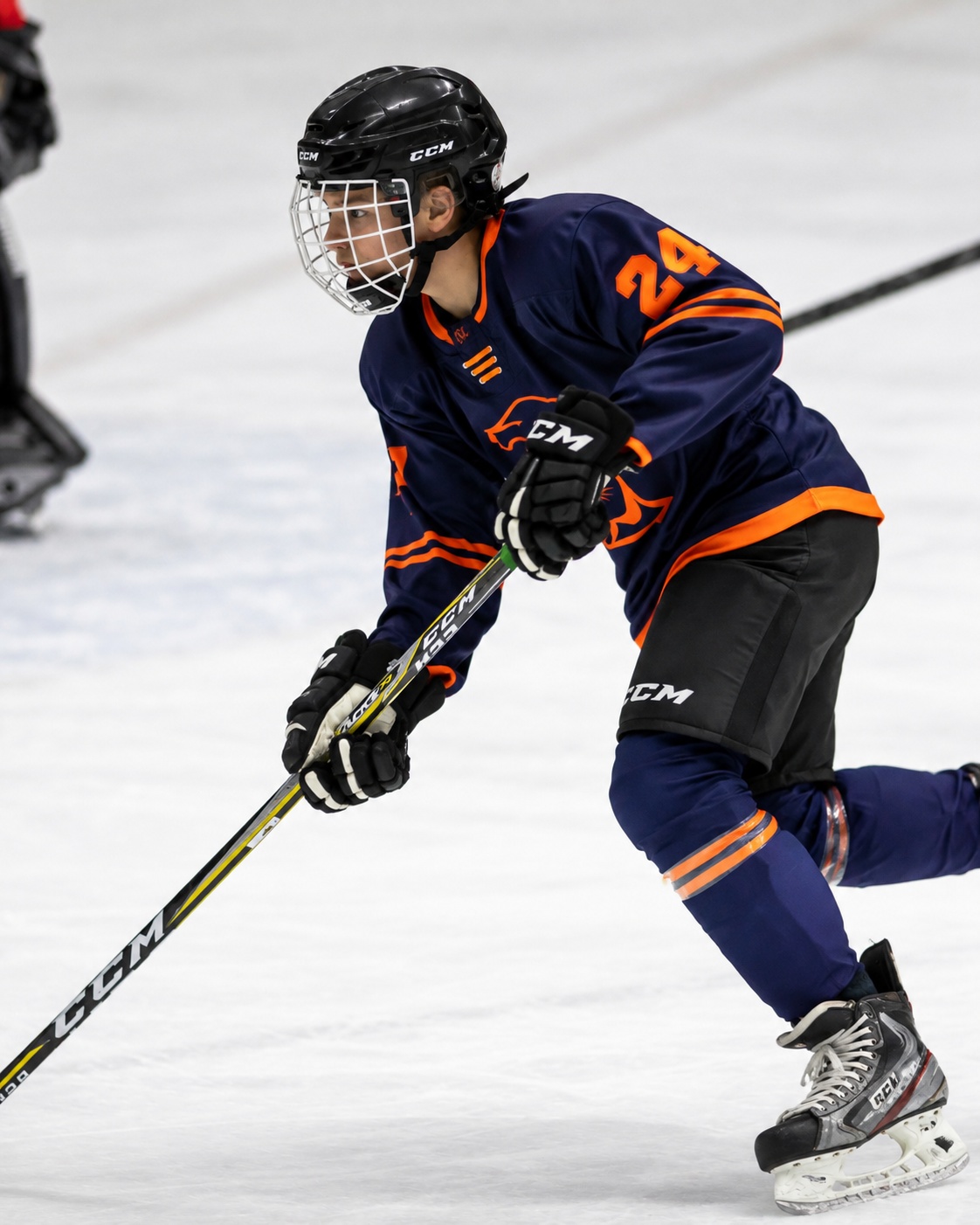
Young hockey player in a blue and white jersey holding his stick on the ice

When every player plays their role well, the team is on the same page and plays with real cohesion. That's when it becomes fun.

First

The 3 situations.

No matter where you are on the ice, you're always in one of these three situations. Recognize it, and you know what to do.

Situation 1

Your team has the puck

  • Score a goal
  • Keep possession and build the attack
  • Create time and space
Situation 2

The other team has the puck

  • Stop them from scoring
  • Get the puck back
  • Take away their time and space
Situation 3

The puck is loose

  • Get the puck — that's it
  • Be first on it
  • Win the position battle

The heart of the game

4 roles. Two at a time. It changes with every turnover.

You never have a fixed role. Your team gets the puck? You become the puck carrier or the non-carrier. The other team gets it? You become the chaser or the cover. Sometimes several times a shift. That's hockey sense.

Who has the puck, right now?

Offensive phase
1

Offensive role

Puck carrier

Keep possession for your team and move the attack forward — alone or with help from your teammates.

Some of your tools for this role:

  • Puck protection
  • Dribbling
  • Carrying
  • Cutting back to the middle
  • Dekes
  • Puck placement
  • Shooting
  • Movement
2

Offensive role

Non-carrier

Support the puck carrier to keep collective control of the puck and keep the offensive phase alive.

Some of your tools for this role:

  • Receiving a pass
  • Creating a passing lane
  • Give-and-go
  • Pass and follow
  • Pick
  • Offensive back-up
  • Screening the goalie
  • Deflection & rebound
Defensive phase
3

Defensive role

Chaser

Pressure the puck carrier to make them lose the puck, take them out of the play and start the defensive phase.

Some of your tools for this role:

  • Approach to the puck carrier
  • Stick checking
  • Physical contact
  • Body checking
  • Cutting the passing lane
  • Blocking a shot
  • Movement
4

Defensive role

Cover

Cover an opponent to stop them from becoming open or dangerous for the puck carrier.

Some of your tools for this role:

  • Man-to-man coverage
  • Tight coverage (danger zone)
  • Loose coverage
  • Head on a swivel
  • Defensive back-up
  • Movement
  • Situation 1Puck carrier or non-carrier
  • Situation 2Chaser or cover
  • Situation 3Everyone chases

Your profile

Your hockey DNA.

Your player profile is the sum of seven pillars. None of them is useless — but four of them make the biggest difference at your age.

Decision-making

  • Vision
  • Anticipation
  • Game understanding
  • Interaction with teammates
  • Interaction with opponents
  • Environment
  • Analyzing outcomes
  • Situations
  • Roles and tasks within the group

The 4 roles

  • Puck carrier
  • Non-carrier
  • Chaser
  • Cover

Skating

  • Forward skating — starts, speed, stops, turns, crossovers, pivots
  • Backward skating — starts, stops, lateral and circular crossovers, pivots

Playing the puck

  • Shots — sweep, slap, wrist, flip — forehand and backhand
  • Passes — sweep, wrist, snap, saucer
  • Receiving — with the stick, with the hand, with the skate
  • Handling — stick grip, carrying, dribbling
  • Advanced techniques — lob, one-timer, shot blocking, board play

Offensive

  • Read and react
  • Role of the puck carrier and non-carrier
  • Getting open
  • Dekes and puck protection
  • Board play, getting out of the corner
  • In front of the goalie: screen, deflection, rebound
  • Faceoffs

Defensive

  • Read and react
  • Man-to-man coverage
  • Stick checking
  • Body checking
  • 1-on-1, 1-on-2
  • Blocking shots

Offensive

  • Read, react, anticipate — and communicate
  • Support, back-up
  • Give-and-go, pass and follow, crossing, switching
  • Offensive triangle, dead zones, stretching the play
  • Zone entries: 2-on-1, 2-on-2, 3-on-2
  • Zone exits, regrouping, counterattack
  • Power play

Defensive

  • Read, react, anticipate — and communicate
  • Role of the chaser and the cover
  • Pressure, slow down, contain
  • Defending the dead zones
  • Defending 2-on-1, 2-on-2, 3-on-2
  • Backcheck, forecheck, zone defense
  • Penalty kill

Energy systems

  • Aerobic endurance
  • Anaerobic endurance
  • Muscular endurance
  • Strength
  • Power
  • Speed

Neuromuscular

  • Agility and dexterity
  • Coordination
  • Balance
  • Spatial orientation
  • Rhythm and tempo
  • Reaction speed
  • Flexibility

The 5 areas

  • Concentration — activation, focus, visualization
  • Confidence — self-talk, external talk, seeing a challenge rather than a threat
  • Motivation — autonomy, goal-setting, sense of competence
  • Relaxation — self-control, recognizing stress and its symptoms
  • Mental toughness — controlling distractions, adapting, stopping negative thoughts, routine

The 5 areas

  • Communication — two-way, active listening, positivity
  • Team spirit — harmonious interactions, team play, roles within the group
  • Leadership — leading by example, staying calm under pressure, earned respect
  • Problem-solving — reading the situation well, being part of the decision, openness to suggestions
  • Human values — autonomy, self-esteem and respect for others, maturity, honesty, responsibility
= Your complete profile Each pillar progresses at its own pace. That's normal.

What's next

Your DNA is the theory. Your contribution is the game.

Choose your profile from the five. Discover your strength, what you still need to improve, your two strongest roles — then name what you really bring to your team. My identity. My contribution.

To go further

The detailed explanations.

The 3 situations

No matter where you are on the ice, you're always in one of these three situations. Recognizing it takes half a second — and it already tells you what to do.

Your reflex to build

  • Your team has the puck → you create time and space.
  • The other team has the puck → you take away their time and space.
  • The puck is loose → you're first on it. Nothing else to decide.
  • Say the situation out loud during your drills. After two weeks, it becomes automatic.
Video coming soon The video explaining this is in the works.

The 4 roles and your toolbox

Your role can change three times in the same shift. It's not a position — it's what the situation asks you to be, right now.

How to use it

  • Two principles run through all four roles: time and space, and support.
  • Each role has its own toolbox. Pick one to work on this week, not eight.
  • If your team gets the puck, you become the puck carrier or the non-carrier.
  • If the other team gets it, you become the chaser or the cover.
  • The best player on a team is rarely the most skilled — it's the one who's useful in all four roles.
Video coming soon The video explaining this is in the works.

Your hockey DNA

Your player profile is the sum of seven pillars. None of them is useless — but four of them make the biggest difference at your age.

What this means for you

  • You don't have to be strong everywhere at once. Each pillar progresses at its own pace.
  • The four priorities: individual skills, individual tactics, team tactics and hockey sense.
  • The other three support them: physical, mental, social. They matter — later, they'll matter even more.
  • Your avatar is your flavour. Two players with the same DNA don't play the same way, and that's okay.
Video coming soon The video explaining this is in the works.

To go further

Discover your player profile.

Choose your profile, name your contribution. You'll walk away with your two strongest roles, what you still need to improve and the three things to work on. Then show this page to your coach — they're working from the same benchmarks on their end.